
· 6 min read
Sustainability in Real Estate: How Smart Tech is Building Greener Properties
Explore how PropTech and IoT are driving sustainability in real estate. Learn about energy-efficient smart buildings, IoT-based resource optimization, and strategies for property managers to go green.
Introduction
Real estate sits at the center of the sustainability challenge—buildings account for roughly 37% of global greenhouse gas emissions when you include construction and operations (unep.org). In response, the industry is increasingly turning to technology and innovative practices to reduce its environmental footprint.
From smart thermostats that slash energy waste to data analytics that inform greener operations, PropTech is emerging as a key enabler of sustainable real estate. This shift isn’t just driven by altruism; it’s fueled by tangible benefits and pressures. Tenants and investors are demanding greener buildings, governments are tightening efficiency standards, and energy savings directly improve the bottom line for property owners.
This article examines how technology is helping build greener properties, covering smart building systems, IoT-based resource management, renewable integration, and sustainable best practices in property management. For property managers and owners, embracing these tools is about future-proofing assets in a world where efficiency and resiliency are paramount.
Quick context
Sustainability in real estate typically combines two goals: (1) reducing resource use and emissions, and (2) improving resilience and long-term asset value. Smart tech helps by making performance measurable—and manageable—day to day.
Smart Building Systems for Energy Efficiency
One of the most impactful ways to improve a building’s sustainability is by adopting smart building systems that optimize energy usage. Traditional controls often run on fixed schedules or manual settings, which can lead to lights blazing in empty rooms or HVAC running at full tilt when no one’s around.
How smart controls reduce waste
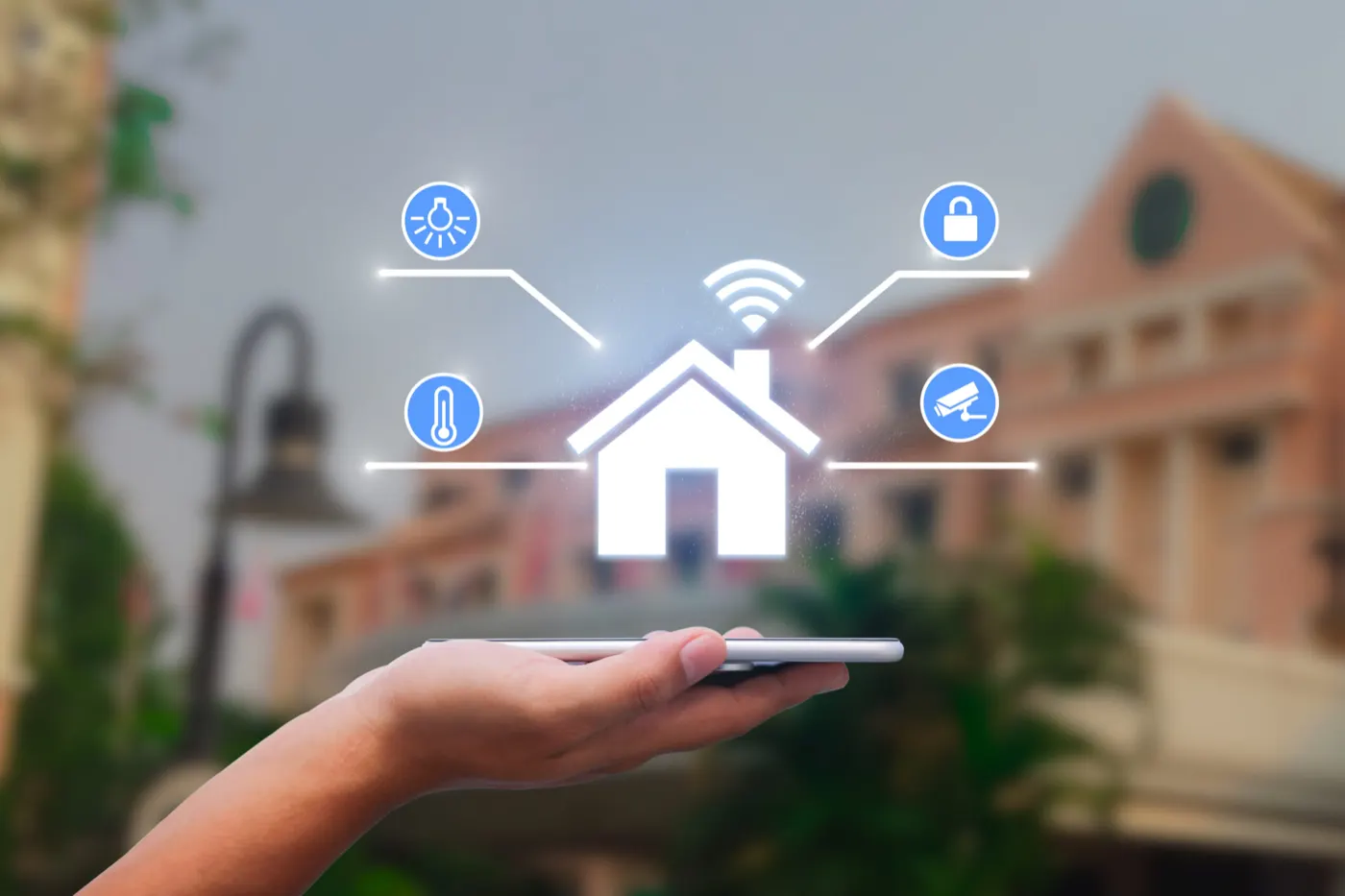
Smart systems solve this by leveraging sensors, IoT connectivity, and intelligent algorithms to continuously adjust in real time. Advanced building management systems (BMS) can connect HVAC, lighting, and sometimes plug loads into one coordinated network. Sensors detect occupancy, temperature, and ambient light, enabling fine-grained adjustments: lights dim or turn off when rooms are vacant; HVAC zones modulate based on the number of people detected and even the weather forecast.
What the data shows
The results are significant: IoT-enabled automation can cut a building’s energy costs by an estimated 10–30% on average (showdigs.com). Real-world retrofits show what’s possible at scale—after a comprehensive retrofit including smart controls, the Empire State Building achieved nearly 40% reduction in energy use, saving millions annually (showdigs.com), while improving comfort.
Why this matters for leasing
Efficiency is increasingly tied to tenant preference. Research has highlighted a “flight to quality” where occupiers seek efficient, high-performing buildings—and often pay a premium for them (netguru.com).
AI energy management takes optimization further
AI-driven energy management platforms analyze building data (and sometimes external factors like energy prices) to find patterns and optimize continuously. A system might learn a building’s thermal behavior and reduce morning warm-up time without affecting comfort, or pre-cool spaces at cheaper, lower-carbon times to flatten peak demand.
Examples cited in industry reporting include outcomes like reduced HVAC energy consumption and portfolio-level savings through anomaly detection and ongoing tuning (showdigs.com). Water efficiency is also improved through smart irrigation controllers and leak detection, while LED lighting paired with sensors and daylight harvesting can cut lighting electricity substantially and reduce maintenance waste.
Key takeaways
- Smart controls reduce waste by matching energy use to real-time conditions, not fixed schedules.
- AI helps optimize continuously—finding patterns humans miss and preventing “efficiency drift.”
- Efficiency supports both ESG goals and asset performance through lower OpEx and stronger tenant appeal.
IoT and Data-Driven Resource Management
A defining feature of PropTech’s sustainability push is the use of data and IoT devices to manage resources more effectively. “You can’t improve what you don’t measure”—IoT sensors provide granular visibility into consumption and environmental conditions, unlocking opportunities to reduce waste.
From visibility to action
Sub-metering and IoT monitoring can reveal energy use by system, area, or tenant. If data shows a wing drawing high power over weekends, you can investigate and adjust schedules or shut down equipment. Air quality and humidity sensors can ensure ventilation runs only as needed, supporting healthy indoor environments while avoiding over-ventilation.
Predictive analytics prevents inefficiency
Predictive analytics can detect performance degradation—such as a chiller losing efficiency—so managers can intervene before waste accumulates (showdigs.com). Water monitoring can flag continuous flow (potential leaks), irrigation running during rain, or abnormal spikes indicating faulty fixtures.
Portfolio benchmarking and ESG reporting
Central platforms can aggregate data across multiple buildings, allowing benchmarking: why is Building A using more energy per square foot than Building B? Insights like these help prioritize upgrades, validate capital investments, and support reporting. Many jurisdictions require energy and water reporting, and investors increasingly ask for reliable ESG metrics—having accurate sensor-based data helps teams respond confidently.
Operational bonus: tenant engagement
Sharing performance data with occupants—through dashboards, emails, or in-building displays—can reinforce participation and encourage small behavior changes that compound into meaningful savings.
In short, IoT and analytics turn buildings into responsive, transparent environments. Rather than running on static settings, management becomes dynamic and evidence-based, catching problems earlier and proving results more clearly over time.
Renewable Energy Integration and Storage
Achieving sustainability goes beyond reducing consumption—it also involves transitioning to cleaner energy sources. PropTech increasingly supports the integration of on-site renewables, monitoring, and storage to maximize impact and manage complexity.
Getting more value from on-site generation
For buildings with solar, real-time monitoring helps track output and match building loads to production (self-consumption). Smart systems can shift flexible loads to times when solar is abundant—for example, pre-cooling during peak solar production to reduce later demand.
Storage, demand charges, and grid resilience
Battery systems store excess solar or off-peak power, and smart controllers decide when to charge or discharge. This can reduce peak demand, support resilience, and help buildings avoid the highest-cost (and often highest-emission) grid periods.
EV charging as a new sustainability workload
EV charging is expanding quickly, and smart charging systems can stagger charging and prevent capacity issues. Over time, vehicle-to-grid models may enable EVs to contribute to building and grid flexibility.
At the market level, PropTech can also enable advanced models like local energy marketplaces and “virtual power plant” approaches where buildings collectively provide grid services (netguru.com). Regardless of complexity, the principle is the same: technology helps renewables and flexible loads work together so sustainability improvements are reliable and financeable.
Investor lens
ESG performance increasingly influences investment decisions, and energy strategy is becoming a visible differentiator for assets (oxfordcompanies.com).
Sustainable Best Practices for Property Managers
Technology accelerates sustainability, but outcomes depend on operational discipline and stakeholder engagement. Here are high-impact practices property managers can lead—supported by PropTech where applicable.
1) Run a proactive maintenance program
Well-tuned equipment runs efficiently. Predictive maintenance tools can flag deviations (showdigs.com), but teams need clear workflows and service standards to turn alerts into results.
2) Engage tenants and occupants
Even smart buildings waste resources if occupants override settings or ignore leaks. Use communications, signage, and simple campaigns to reinforce behaviors (proper recycling, reporting leaks, avoiding extreme thermostat overrides). Consider sharing progress and wins to build momentum.
3) Use sustainable procurement and retrofit standards
When replacing equipment or renovating, choose efficient appliances, low-flow fixtures, LED lighting, and low-VOC materials. These reduce operating impact and can improve indoor environmental quality.
4) Make reporting and compliance routine
Build a repeatable sustainability reporting cadence—monthly internal dashboards and annual summaries for stakeholders. IoT data can simplify benchmarking and ensure you’re prepared for regulatory changes and investor requests.
- Set a baseline: energy, water, and waste KPIs (per sq. ft. where possible).
- Install sensors where visibility is weak (sub-meters, leak detection, occupancy).
- Prioritize upgrades with the fastest payback (controls, LEDs, scheduling).
- Create an escalation workflow for anomalies (who investigates, by when).
- Share results regularly with tenants and owners to sustain buy-in.
Quick checklist
Ultimately, sustainable management is part technology, part policy, and part community collaboration. The strongest results come from combining all three.
How ExelonProp Helps
Achieving sustainability at scale becomes more feasible with a unified system that connects building data, operations, and reporting. ExelonProp is designed to support that approach by integrating connected devices and operational workflows into a single platform—helping teams monitor performance, act on anomalies, and document progress.
With IoT integrations, property teams can bring sensor and meter data into one place (vantaca.com), reducing the friction of managing multiple vendor portals. Analytics and reporting capabilities can support sustainability tracking and disclosure workflows—especially when energy and resource data needs to be consolidated for owners, investors, or compliance programs.
Operationally, maintenance workflows paired with predictive insights can help prevent “silent waste” from underperforming equipment—turning efficiency opportunities into actionable work orders. And communication tools can support tenant engagement initiatives, closing the loop between building performance and occupant behavior.
Conclusion
Sustainability has moved to the core of real estate management—driven by necessity, stakeholder expectations, and the growing evidence that efficiency and asset performance can rise together. Buildings are becoming smarter and greener: lights and HVAC respond to occupancy, solar and storage complement the grid, and water is carefully monitored and conserved.
These changes can deliver concrete benefits, including lower operating costs and improved tenant attraction and retention. Efficiency measures can produce meaningful operational savings (netguru.com), while credible ESG performance is increasingly visible to investors and the market (oxfordcompanies.com).
The path isn’t without challenges—upfront costs, training, and alignment between owners and occupants—but incentives, better tools, and clearer ROI are helping. The practical next step is simple: start measuring, start optimizing, and build sustainability into everyday property operations.
References
- unep.org
- showdigs.com
- netguru.com
- oxfordcompanies.com
- vantaca.com